
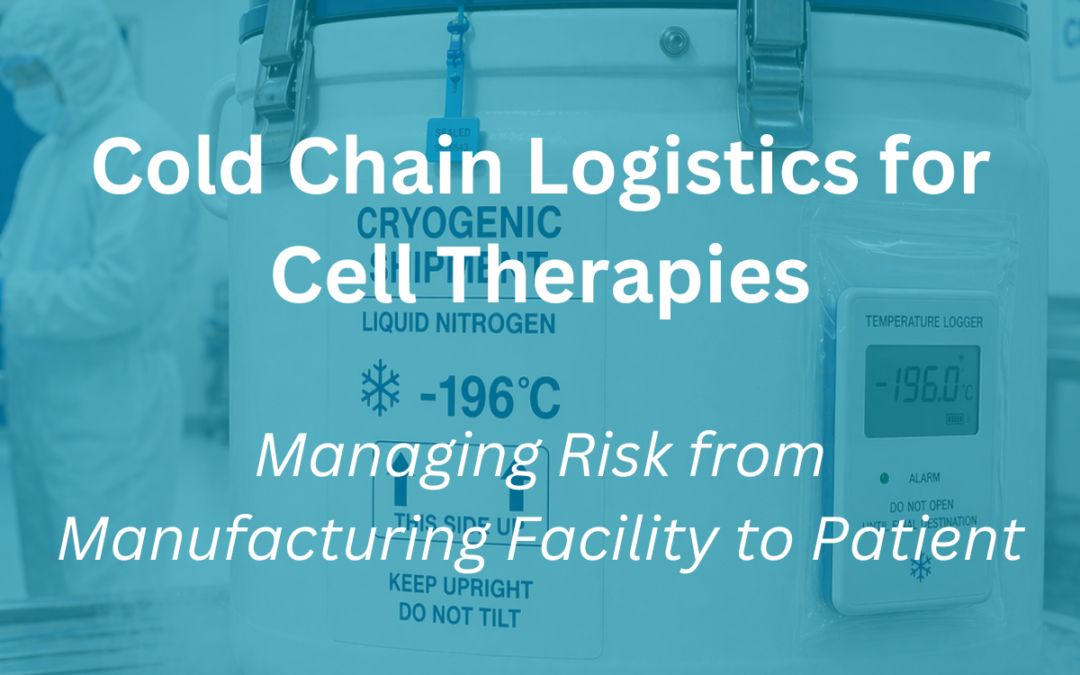
The success of a cell therapy extends well beyond development and GMP manufacturing. It also depends on the ability to deliver the product safely, reliably, and under tightly controlled conditions. Unlike traditional pharmaceuticals, cell therapies are highly sensitive, patient-specific, and of very high value. As a result, cold chain logistics is not just a supporting function, it is fundamental to maintaining cell viability and ensuring successful patient outcomes.
In this article, HiTech Health explores the key risks associated with cell therapy logistics and outlines considerations for managing these risks from manufacturing facility to patient.
The Unique Challenge of Cell Therapy Logistics
Cell therapies present a level of logistical complexity far beyond conventional medicines. These products are typically cryopreserved at ultra-low temperatures (≤ -150°C), often time-sensitive, and, in many cases, patient-specific, requiring full traceability at every stage. Cell therapies are also frequently transported across international borders, adding further regulatory, customs and operational complexity. Any deviation in temperature, delays in transit, or breakdown in chain of identity can compromise product integrity and ultimately impact patient outcomes.
Managing Risk in the Cold Chain
One of the most critical risks with shipping cell therapies is temperature excursion. Maintaining ultra-low temperatures throughout transit is essential, as even brief deviations can affect cell viability and potency. This risk is often heightened by delays at customs, the use of inexperienced transportation providers, or inadequately qualified shipping lanes or equipment. Mitigation strategies include the use of validated cryoshippers with proven hold times, pre-qualified shipping lanes, and continuous temperature monitoring with real-time visibility.
Equally important is maintaining a robust chain of identity and custody, particularly for autologous therapies. Any mismatch between patient and product is unacceptable. This risk can be effectively managed through digital tracking systems, secure labelling solutions such as barcoding or RFID, and comprehensive documentation across the entire supply chain.
Operational variability also introduces risk. Cell therapies typically move through multiple stakeholders, including manufacturing sites, storage depots, and clinical sites. Each handoff creates potential for error. Standardised handling procedures, well-trained logistics partners, and clear communication pathways are essential to ensure consistency and control. Teams should also consider implementing documentation checklists to prevent delays in exportation and importation processes.
Regulatory compliance adds another layer of complexity. International shipments must navigate differing import/export and customs requirements. Early planning, accurate documentation, and collaboration with experienced partners are key to avoiding delays and ensuring compliance, so that patients can receive their treatments in a timely manner. For therapies supplied in the EU and UK markets, having a Manufacturer’s/Importer’s Authorisation (MIA) holder and an experienced Qualified Person (QP) team is critical to reviewing the cold chain from a quality and compliance perspective.
Building a Resilient Cold Chain Strategy
A robust cold chain strategy requires a proactive, end-to-end approach. This includes qualifying shipping routes under real-world conditions, conducting thorough risk assessments, and implementing contingency plans for potential disruptions such as delays or equipment failures.
Efficient cold chain logistics is not simply about transporting a cell therapy, it is about protecting the integrity of a potentially life-saving treatment at every stage of its journey. By understanding the unique risks involved and implementing effective mitigation strategies, developers can improve reliability, reduce failure rates, and ensure that high quality therapies reach patients on time for their treatment.
HiTech Health has extensive experience supporting developers in implementing robust supply chains for cell therapies, with an in-house team of GDP-trained supply chain personnel. The company also holds MIAs in both the EU and UK to support clinical trials and commercial launches.
Contact our team today and schedule a call to learn more about how we can support your cell therapy logistics requirements.